Showing posts with label biography. Show all posts

Saturday, October 2, 2021

Even If It's Hopeless

Excerpted from The Mayor of Castro Street:  The Life and times of Harvey Milk by Randy Shilts, ©1982:

Harvey himself never talked much about his childhood in Woodmere and Bayshore, except for two stories. First, the August afternoon a few weeks after his graduation when he was briefly picked up by police for indecent exposure. And then, there was the day his parents sat him down in 1943 to tell him about the brave Jews of Warsaw who were hopelessly outnumbered and surrounded by Nazi troops. But they fought on anyway, not because they thought they could win, but because when something that evil descends on the world, you have to fight. Even if it's hopeless. 

By the time Harvey took his high school diploma, news of the Nazi Holocaust had shocked the world, especially the millions of American middle-class Jews who had grown to feel so secure. The Holocaust touched Milk doubly, in a way that he could not have imagined at that time. 

Before Hitler's rise, Germany had an active gay liberation movement that pressed for legal demands and collected hundreds of thousands of signatures on petitions asking for homosexual equality. But in 1936, Reichsfuhrer SS Heinrich Himmler issued the following decree: 

Just as we today have gone back to the ancient German view on the question of marriages mixing different races, so too in our judgment of homosexuality-- a symptom of degeneracy which could destroy our race-- we must return to the guiding Nordic principle, extermination of degenerates.

About a year later, Himmler ordered that gays be rounded up and sent to Level 3 camps-- the death camps. Gays wore pink triangles, so they would not be confused with Jews who wore yellow stars of David. Some estimates put the number of gays exterminated at over 220,000, the second largest category of Nazi genocide victims after Jews. 

This attempt at genocide efficiently squashed the only gay political movement in the Western world. Harvey Milk, meanwhile, was seven years old then, playing in the aisles of grandfather Morris' dry goods store. It would be years before ideas of gay equality rumbled again, this time in the United States.

The "indecent exposure," by the way, was a trumped-up charge the police used to harass gays at the time.  He had merely taken his shirt off in a park.

I really worry that we're about to see an assault on gay rights next.  The trumpists have successfully restricted Black voting rights and female reproductive rights, and there's no reason to believe they're going to rest on their laurels.

We've seen their playbook.

Sunday, June 20, 2021

Rhythm and Length


 Excerpted from an article in The Nation about Joan Didion:

In Blue Nights, her 2011 memoir about grief, family, and work, Didion said that when she and her husband, John Gregory Dunne, worked on dialogue for their screenplays, they would mark the time a character spent speaking before coming up with the words themselves: What was said was not as important as the rhythm and length of the speech.

That's interesting.  That sounds more like a song than a screenplay.

You can read the whole article HERE.

Monday, January 28, 2019

Chang and Eng

Excerpted from The Two, the biography of the original Siamese Twins, Chang and Eng Bunker, by Irving and Amy Wallace, ©1978:

On another visit to Philadelphia, the fact that the twins were genuinely united saved them from a fine or jail. A spectator, shaking hands with Chang, squeezed his hand painfully hard. Immediately, Chang punched him, knocking him off his feet. The man rose, summoned the law, and the twins were hauled before a magistrate on charge of assault and battery. The magistrate, after studying the twins connecting band, addressed the complainant. The judge agreed that Chang could be jailed for assault, but added that if Eng were also jailed it would amount to false arrest and the complainant himself would have to be prosecuted. Needless to say, the injured party dropped his charges.


It's a strange thing to think about, but I've wondered what would happen if one person, conjoined with another, committed a crime.  This judge didn't really answer that question, he just found a clever way to avoid making the decision himself.

The book was a lot more interesting than I expected it to be.  The brothers were far more than just sideshow freaks.  They retired from show business at an early age, married sisters and fathered 21 (!) children, owned slaves and ran a successful farm, met Abraham Lincoln; they led full and happy lives.

Saturday, December 15, 2018

The Outer Fringe

Americans: A Book of Lives ©1946 by Hermann Hagedorn has been really fun and informative.  In this excerpt, he shared horticulturist Luther Burbank's concept of life, the universe, and everything:

"Life," Burbank wrote, "is not material… the life-stream is not a substance. Life is a force-- electrical, magnetic, a quality, not a quantity.” He saw a universe which was “absolutely all force, life, soul, thought, or whatever name we may choose to call it.” The time would come, he predicted, and the world of science caught up with him a generation later-- when there would be no line left between force and matter. A dead material universe moved by outside forces, seemed to him “highly improbable. A universe of force alone,” he declared, “is probable, but requires great effort to make it conceivable, because we must conceive it in terms of our sense experience… All life on our planet is, so to speak, just on the outer fringe of this infinite ocean of force… We get discouraged with the material, but, if we could think of the force, we should see how steadily and surely it is impelling us all toward a better and higher and nobler destiny…”


The punctuation seems a little suspect, but I left it as I found it.  Maybe standards have changed over the last 70 years.

Burbank's books are in the public domain, but they are very hard to come by.   Google Books has most of them available HERE,  but unfortunately they require you to have an account and use their app to access them; it's a cumbersome process, the scan quality is poor, and frankly I decided it just wasn't worth it.  I'm looking for better sources.

You can read more about the life of Luther Burbank at LutherBurbank.org.


Wednesday, December 12, 2018

Phonograph

In this excerpt from Americans: A Book of Lives ©1946. Hermann Hagedorn describes the moment Thomas Edison first tested his new invention to record and play back sounds:

Three weeks after his interest had first been stirred, he (Thomas Edison) handed his chief mechanic a rough sketch of a queer-looking instrument, including a metal cylinder spirally ground and mounted on a long shaft, running in two upright bearings.


The mechanic wondered. Most of the apparatus he head hitherto constructed had been electrical, but this one called for no coils, no magnets, no wires. He kept his mouth shut and followed the sketch. The instrument he subsequently brought to Edison for his approval was a cylinder covered with tinfoil and turned with a hand-crank. "What's it supposed to do, chief?" asked the mechanic without enthusiasm.


"The thing must talk," answered Edison.


The mechanic smiled dubiously. The bookkeeper, standing near, offered to bet a handful of cigars in support of his skepticism, whereupon the mechanic laid two dollars against the chief's faith. Edison, lacking the two dollars, matched his bet with a barrel of apples.


Thereupon he turned the crank and in a loud voice recited, ("shouted," he told Henry Ford):


"Mary had a little lamb,
Its fleece was white as snow,
And everywhere that Mary went
The lamb was sure to go."


He adjusted the reproducer, restored the cylinder to its original position, and again turned the crank.


"Mary had a little lamb…"


came the words in a strange voice, unlike his own, but unmistakably clear.


The mechanic nearly fainted for fright. Edison himself admitted that he was "a little scared"; partly of the machine he had created, partly because success had come so easily. "I was always afraid of things that worked the first time."


It's hard to imagine a time when hearing a human voice coming from a machine would inspire fear and awe.  The incredible has become commonplace.

Tuesday, December 4, 2018

Rivals

"The important thing for him was to see himself as part of the cosmos and related to it, not a 'rival god,' shaking his fist at the skies."  ~Hermann Hagedorn's description of Oliver Wendell Holmes, from his book Americans: A Book of Lives ©1946

Friday, July 20, 2018

In a world seduced by easy understanding…

This short excerpt from the preface to E.E Cummings: A Life by Susan Cheever, ©2014, was a big help to me in understanding his poems.  It's a tremendous relief to know I'm not supposed to "get it" right away:

Modernism as (E.E.) Cummings and his mid-twentieth-century colleagues embraced it had three parts. The first was the exploration of using sounds instead of meanings to connect words to the reader's feelings. The second was the idea of stripping away all unnecessary things to bring attention to form and structure: the formerly hidden skeleton of a work would now be exuberantly visible. The third facet of modernism was an embrace of adversity. In a world seduced by easy understanding, the modernists believed that difficulty enhanced the pleasures of reading. In a Cummings poem the reader must often pick his way toward comprehension, which comes, when it does, in a burst of delight and recognition.

Friday, July 6, 2018

Slow Down the Inexorable Rush

Excerpted from the preface to E.E Cummings: A Life by Susan Cheever, ©2014

Princeton poet Richard P. Blackmur said (E.E.) Cummings's poems were "baby talk," and poetry arbiter Helen Vendler called them repellent and foolish: "What is wrong with a man who writes this?" she asked.


Nothing was wrong with Cummings-- or Duchamp or Stravinsky or Joyce, for that matter. All were trying to slow down the seemingly inexorable rush of the world, to force people to notice their own lives. In the twenty-first century, that rush has now reached Force-Five; we are all inundated with information and given no time to wonder what it means or where it came from. Access without understanding and facts without context have become our daily diet.


Friday, December 9, 2016

Will

Excerpt from The Will Rogers Book compiled by Paula McSpadden Love, ©1971:

Will's mother died when he was ten years old, and somehow he always carried the hurt of this parting.  Instinctively his heart was touched by anyone who was motherless.  His sisters, Sallie, Maud and May, were devoted to him and left nothing undone for their young brother.  His father seldom denied him anything.  To them he was always someone very special.  Neighboring ranchers and all the relatives felt he belonged to them.  Their homes were always open to "Uncle Clem's boy."  It was this love he prized so much that he never grew apart from the "home folks."  In fact, his years of success intensified his love for his people, and it was no wonder everyone in the Southwest claimed kin to him.


If you look closely at anyone who is good and kind, or someone who is evil and vindictive, you'll find the same root cause:  suffering.

Some people will spend their lives doing their best to make sure nobody else suffers as they did, and some will spend their lives trying to make sure everyone suffers as badly as they have.

I think which path they take is a reflection of the compassion that was directed towards them when they needed it most.

Saturday, September 17, 2016

General Obliviousness

Excerpted from the biography of Henry A. Wallace, American Dreamer by John C. Culver and John Hyde ©2000:

"Henry Wallace was on her trail every minute," said one of Ilo's friends. "He used to take Ilo driving in a dilapidated old car. Money never meant a thing to Henry, and his eccentricity didn't matter to Ilo." His general obliviousness to customary courtship practices had an endearing quality of its own. On one of their dates Henry brought along his copy of Farmers of Forty Centuries so he and Ilo could discuss Chinese agricultural practices.


At times Henry's peculiarity was a bit much for Ilo's friends. They gossiped that he was existing on a diet of nothing but soybeans and cabbages, and grumbled about his unruly appearance. "Ilo, don't you think you could do something about Henry's ties," one of her friends asked. To Ilo, however, what mattered were the "splendid qualities" she saw in him. His quiet strength, his dedication to God and family, his serious demeanor-- these were qualities she thought her late father would have admired. She felt with Henry a sense of comfort and security. It seemed, she remarked years later, as if she had always known him.


I'm a long-haired vegetarian communist Hare Krishna devotee living in East Texas.  When there's a bug in the house I grab my butterfly net and a Peterson's Field Guide, not a can of Raid. I don't eat peanuts because it's disturbing to me that a seed would grow underground.

I  know I'm weird, and I know that Mona's friends and family expressed concern while we were courting.

I'm very lucky that, like Henry's Ilo,  my Mona found my general obliviousness to customary courtship practices endearing.

Thursday, September 15, 2016

Something Divine

I'm reading a biography of Henry A. Wallace, American Dreamer by John C. Culver and John Hyde ©2000, and it mentions a famous friend he made at the age of four:

(George Washington) Carver, the son of slaves, wandered through the Midwest for years after the Civil War before becoming Iowa State's first black student in 1891.  There his gentle manner, enormous dedication, and religious devotion won him wide acceptance with students and faculty alike.  Among Carver's friends was Harry Wallace.  First as a student and then as a professor, Wallace spent hours with Carver and regularly invited him to his home for dinner.  There Carver met young Henry, the boy who loved plants.


Carver "took a fancy to me and took me with him on botanizing expeditions and pointed out to me  the flowers and the parts of the flowers-- the stamens and the pistil," H. A. Wallace recalled.  "I remember him claiming to my father that I had greatly surprised him by recognizing the pistil and stamen  of redtop, a kind of grass-- grass Agrostis alba to be precise.  I also remember rather questioning his accuracy in believing that I recognized these parts, but anyhow he boasted about me, and the mere fact of his boasting, I think, incited me to learn more than if I had really done what he said I had done."


More important, Carver had a sense that all living things possessed something divine, that God could speak from the parts of a flower or a blade of grass.  Their walks continued for about a year, after which Wallace left Ames, but Young Henry had permanently absorbed the philosophy of his gentle friend.


I have read many lists in my life of all the wonderful things George Washington Carver could do with peanuts, but this is the first time I've really wanted to get to know him.

Wednesday, September 7, 2016

My Friend

[embed]https://youtu.be/MxAyCtsKvbc[/embed]

Before Jeffery Dahmer was a serial killer, he was just a kid in school.  His peers all knew there was something seriously wrong, but they were just kids, too, and were not equipped to deal with the problem.  Adults were largely absent from his life-- he didn't make trouble for them, so they never looked too closely at him.

And we all know how it turned out.

One of his classmates, Derf Backderf, has written a haunting memoir of what is was like growing up down the street from Dahmer.  It's not prurient-- the book stops well before the killings began-- but it is disturbing.

My Friend Dahmer is a book that will stick with you.  I recommend it.

The author’s web page is HERE.

Sunday, August 28, 2016

Footprints

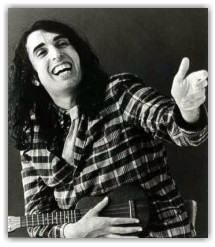
Excerpted from Eternal Troubadour:  the Improbable Life of Tiny Tim by Justin Martell, ©2016:

Shortly after Tiny died, Sue's father joined her at the hospital.


"How is he?" He asked.


"He's gone," Sue replied.


A nurse delivered Tiny's wedding ring and a Celtic cross necklace Sue had given him very recently.  Then she and her father said a prayer in the hospital chapel and left.  The same limousine that had ferried Tiny and Sue to the benefit now took her home.  As she stepped out of the limo, she was greeted by  the "most unbearable sight of the evening":  the footprints she and Tiny had left in the snow on the way out of the house.


It's always something that gets you:  fading footprints in the snow, a song on the radio, a blinking light on the answering machine; something that remind us that we don't know, can't know, didn't know.

Sunday, August 14, 2016

Opening the Door

"He was sincere, and he was caring, and he was loving, and he was not like other people.  The fact of his acceptance and embrace was different among certain kinds of people-- many just saw him as weirder than weird and that was that, but there were many others that found him delightful.  In a way, his acceptance was part of opening the door to a general acceptance of people who were not like other people-- they didn't have to be marginalized."  ~Peter Yarrow on Tiny Tim, in Eternal Troubadour:  the Improbable Life of Tiny Tim by Justin Martell, ©2016

Saturday, July 2, 2016

1948, I'd like you to meet 2016:

In this excerpt from Henry Wallace, Harry Truman, and the Cold War by Richard J. Walton ©1976, try (just for fun) replacing "Harry Truman" with "Hillary Clinton," and "Henry Wallace" with "Bernie Sanders":

This was a serious man raising serious questions and this is as good a time as any to deal with them. (J. Raymond) Walsh, and (Henry) Wallace, had to face two age-old political dilemmas: do you fight more effectively from within than from without; is it better to accept the lesser evil or refuse to accept either? As to the first part of the question, many prominent American political figures in recent decades have had to make that choice. All chose to stay, none was effective in changing policy, and they deprived the American people of the healthful public debate that would have resulted had they quit in protest. Dozens of upper-level figures in the Kennedy and Johnson administrations, for example, claimed or let it be understood that they were doing all they could to change policy regarding Vietnam, but none was willing to sacrifice his political future my making a public fight. To put personal future above political conscience is, sad to say, a long American tradition. Unlike these other men, Wallace felt, as Josiah Gitt put it, that he was “honor bound” to force a public debate.


Wallace had tried within the party to cause Truman to modify his “get-tough” policy (with Russia). There was nothing more he could do by remaining within the party than to become an increasingly ignored scold. As to domestic policy, Truman had already begun to move back toward FDR’s policies, whether in response to Wallace or as a pragmatic, bread-and-butter strategy, once cannot be certain, possibly both.


As to the lesser-evil theory, it was a tough question for Wallace sympathizers and was a more difficult philosophical and practical question than the choice between forcing a public debate and keeping quiet. It is an impossible dilemma for a progressive when both parties nominate unacceptable men. If he elects the marginally superior man, he prevents necessary change. If he does not, he gets the worse candidate and still no change. That was the dilemma faced by such progressives as J. Raymond Walsh in 1948. They did not want Truman and they did not want a Republican. But in 1948 party loyalty, with the memory of FDR still fresh, was much stronger among Democrats than it has been in recent years. So these progressives thought wistfully of Wallace, swallowed hard, and supported Truman. There were not unprincipled men and women copping out, but people making the only choice they thought they could make. To them, whose last Republican Presidents were Hoover and Coolidge, it was simply unthinkable to do anything that might result in a Republican victory.

Saturday, June 25, 2016

Guilt Consciousness

Excerpted from Henry Wallace, Harry Truman, and the Cold War by Richard J. Walton ©1976, Henry Wallace writes in his diary about  meeting  J. Robert Oppenheimer:

I never saw a man in such an extremely nervous state as Oppenheimer.  He seemed to feel that the destruction of the entire human race was imminent…  He has been in charge of the scientists in New Mexico and says that the heart has completely gone out of them there; that all they think about now are the social and economic implications of the bomb, and that they are no longer doing anything worthwhile on the scientific level…  He says that… Secretary (James F.) Byrnes has felt that we could use the bomb as a pistol to get what we wanted in international diplomacy.  Oppenheimer believes that method will not work.  He says the Russians are a proud people and have good physicists and abundant resources.  They may have to lower their standard of living to do it but they will put everything they have got into getting plenty of atomic bombs as soon as possible.  He thinks  the mishandling of the situation at Potsdam has prepared the way for the eventual slaughter of tens of millions or perhaps hundreds of millions of innocent people.


The guilt consciousness of the atomic bomb scientists is one of the most astounding things I have ever seen.


That's the part of warfare that isn't mentioned very much.  After all the flags have been waved, the medals have been pinned to chests, and the post-parade confetti swept up and put into bins, the participants are left alone to reconcile their consciences with the terrible things they have done.

Friday, March 25, 2016

Faith

In this excerpt from The Chris Farley Show:  A Biography in Three Acts ©2008, Father Tom Gannon talks about Chris Farley and faith:

Chris was caught in a transition in Catholicism between an old-church approach to faith and a newer way of thinking. The old view of spirituality was that life was like climbing a mountain. You have to fight onward and upward, climbing with your spiritual crampons until you reach the top – and that's perfection. You pass the trial and you pass the test and you get so many gold stars in your copybook. Then you come before the heavenly throne for judgment, and maybe you got a couple of indulgences in your back pocket in case your accounting was wrong.


But that kind of faith only gets a person so far. Your spiritual life isn't like climbing a mountain, waiting to find God at the top. It's a journey, full of highs and lows, and God is there with you every step of the way, in the here and now and in the hereafter.The first approach is really a whole lot of smoke and mirrors. It's only the second one that allows a person to grow, but that second view is hard for people to get a hold of unless they get in touch with themselves.


Chris didn't feel that he was worthy of God's love. He felt he had to prove himself. Well, you're never going to get very far in any relationship with that kind of belief. Imagine if you had to prove yourself to your spouse every single day; that's not the way love works. In all of our talks, that was the one thing I really tried to work with him on, adjusting to this different idea of faith, but he never really moved from one to the other. It's hard. It takes a long time to come around to that way of thinking, and Chris just ran out of time.

You and Yours

In The Chris Farley Show:  A Biography in Three Acts ©2008, Jillian Seely remembers her friend:
"The thing that was great about Chris was that he started all of his conversations with 'How was your day?  What did you do?'  Nobody does that anymore.  That's why Chris was so different from most people.  He was not selfish at all when it came to being a friend."

Monday, February 8, 2016

Mis/Pre

I'm reading a biography of 17th century priest/scientist Athanasius Kircher, A Man of Misconceptions:  The Life of an Eccentric in an Age of Change by John Glassie, ©2012.

The book is written in kind of a condescending tone, "Ha ha, let's all laugh at the buffoon who got everything wrong," but I don't think that's entirely fair.

Father Kircher was a brilliant, inquisitive man whose observations of the world didn't  match what he had been taught was true.  Instead of changing his mind, he changed his data.

How many of us are completely innocent of that sin?  How many of us are committing that sin as he was: without even being aware of it?

Thursday, February 4, 2016

Preconceived Notions

Excerpted from John Glassie's excellent biography of Athanasius Kircher, A Man of Misconceptions ©2012:

In 1610, twelve years before Kircher arrived in Cologne, Galileo Galilei, a mathematics professor in Padua, published a slim volume, Starry Messenger, about the observations he'd made with a new instrument he called the perspicillium, or the telescope.  It was a very much improved-upon version of the spyglasses that had recently begun to appear in Europe.  The configuration (a concave lens at one of a tube, and a convex lens at the other) was fairly simple, but Galileo's handcrafted device made things appear, as he wrote, "nearly one thousand times larger and over thirty times closer" than they would with the naked eye.  Among other discoveries, he observed four moons revolving around Jupiter.  The most basic implication of this was clear to any student of natural philosophy willing to admit it.  (At the Jesuit school of La Flèche in Anjou, a student named René Descartes is said to have written a sonnet celebrating the news.)  If moons revolved around Jupiter, maybe earth wasn't really the center of the universe, around which everything revolved.  Galileo also reported that "the moon is not robed in a smooth and polished surface," as Aristotelian doctrine had it, "but is in fact rough and uneven, covered everywhere, just like the Earth's surface, with huge prominences, deep valleys, and chasms."


The Church seemed willing at first to consider these findings.  Clavius and other Jesuit astronomers held a reception for Galileo in Rome, and while Clavius declared telescopes "troublesome to operate," he confirmed the existence of moons around Jupiter.  On the question of the rough surface of the moon, however, the seventy-one-year-old astronomer couldn't bring himself to believe his eyes.  Perhaps the moon was just unevenly dense, he suggested.  In a letter to the Church's chief theologian, a group of Jesuit astronomers wrote together that they were "not sufficiently certain" about the matter.  In other words, preconceived notions were such that Clavius couldn't see through a telescope what modern people, who know the truth, can recognize with the naked eye.